Journal
SPIRIT WORLD: THEgallery at Asia NOW Paris
October 19–24, 2026 · Monnaie de Paris
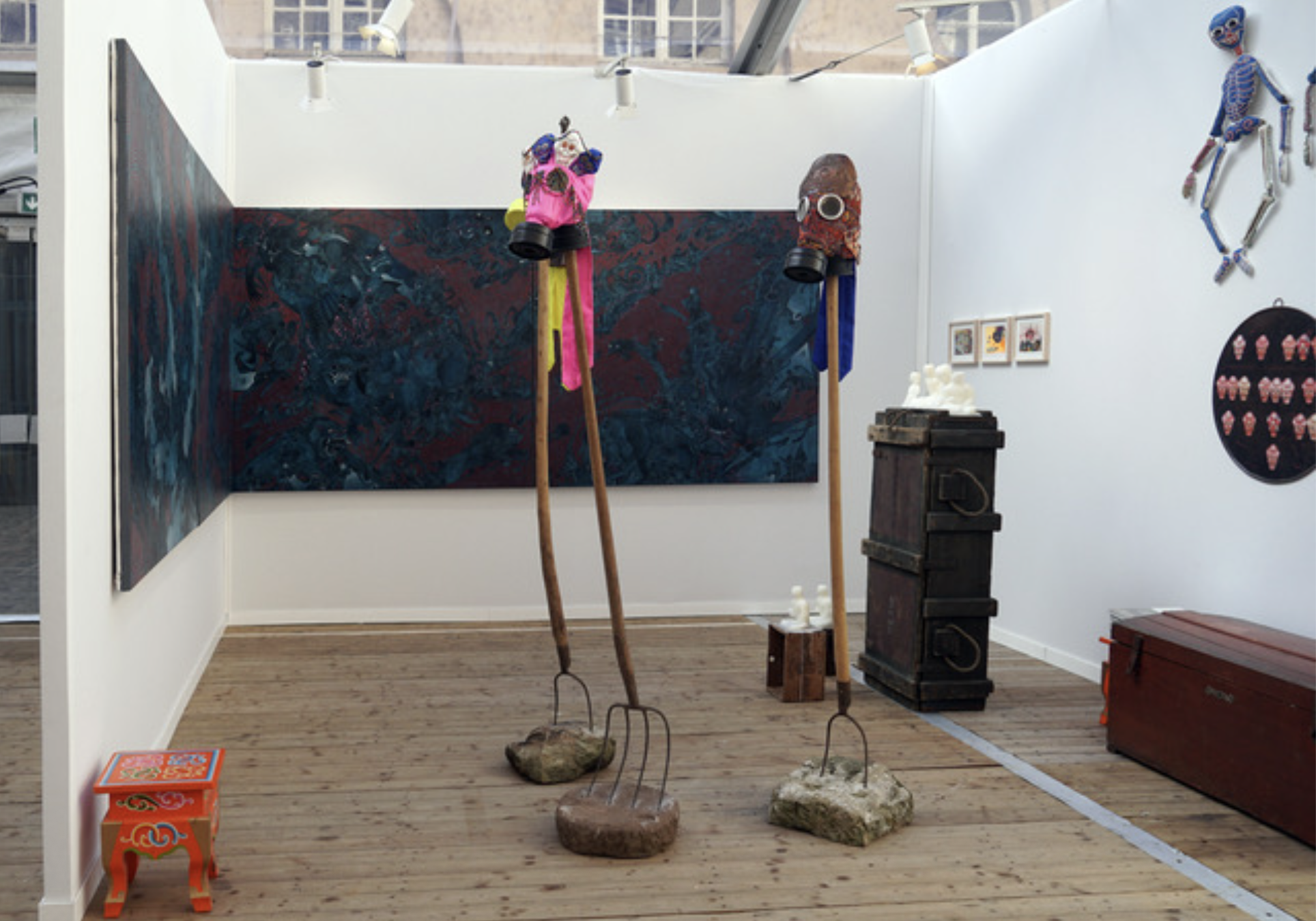
Four Buddha figures on a wartime ammunition box. Gas masks incorporated into sculptures resembling hobby horses. Painted faces surrounded by fragments of Mongolia’s past. The works in SPIRIT WORLD bring spiritual traditions into close contact with the pressures of contemporary life.
At Asia NOW Paris, Thomas Eller’s THEgallery presents four Mongolian artists: Nomin Bold, Gerelkhuu Ganbold, Baatarzorig Batjargal and Shijirbaatar Jambalsuren. Their paintings and sculptures connect belief with personal memory, environmental concerns and cultural survival.
The exhibition’s starting point is a conviction expressed in the gallery’s introduction: “In Mongolia spirituality is not optional. The spiritual world is real.” For these artists, connections with nature, shamanic practices and Buddhist heritage inform how the past is remembered and how the present is understood.
From a water mill to Paris
Behind the presentation is Thomas Eller, the German artist, curator and writer who is also a member of Yuranja’s editorial team.
His gallery is based in a water mill in Mürsbach, near Bamberg. From this rural setting, its activities reach across continents.
Eller’s experience has taken him through Europe, the United States and Asia. During six years in Beijing, he founded Gallery Weekend Beijing, bringing international audiences into contact with the city’s art scene. He later spent three years as founding director of the China Arts & Sciences Project in Jingdezhen. His curatorial work includes the seventh Guangzhou Triennial in 2023 and, this year, the Mongolia Pavilion at the Venice Biennale.
That last connection is particularly relevant to SPIRIT WORLD. Nomin Bold and Gerelkhuu Ganbold both feature in the 2026 Mongolia Pavilion. In Paris, their work is presented alongside that of Batjargal and Jambalsuren.
Four ways into the spirit world
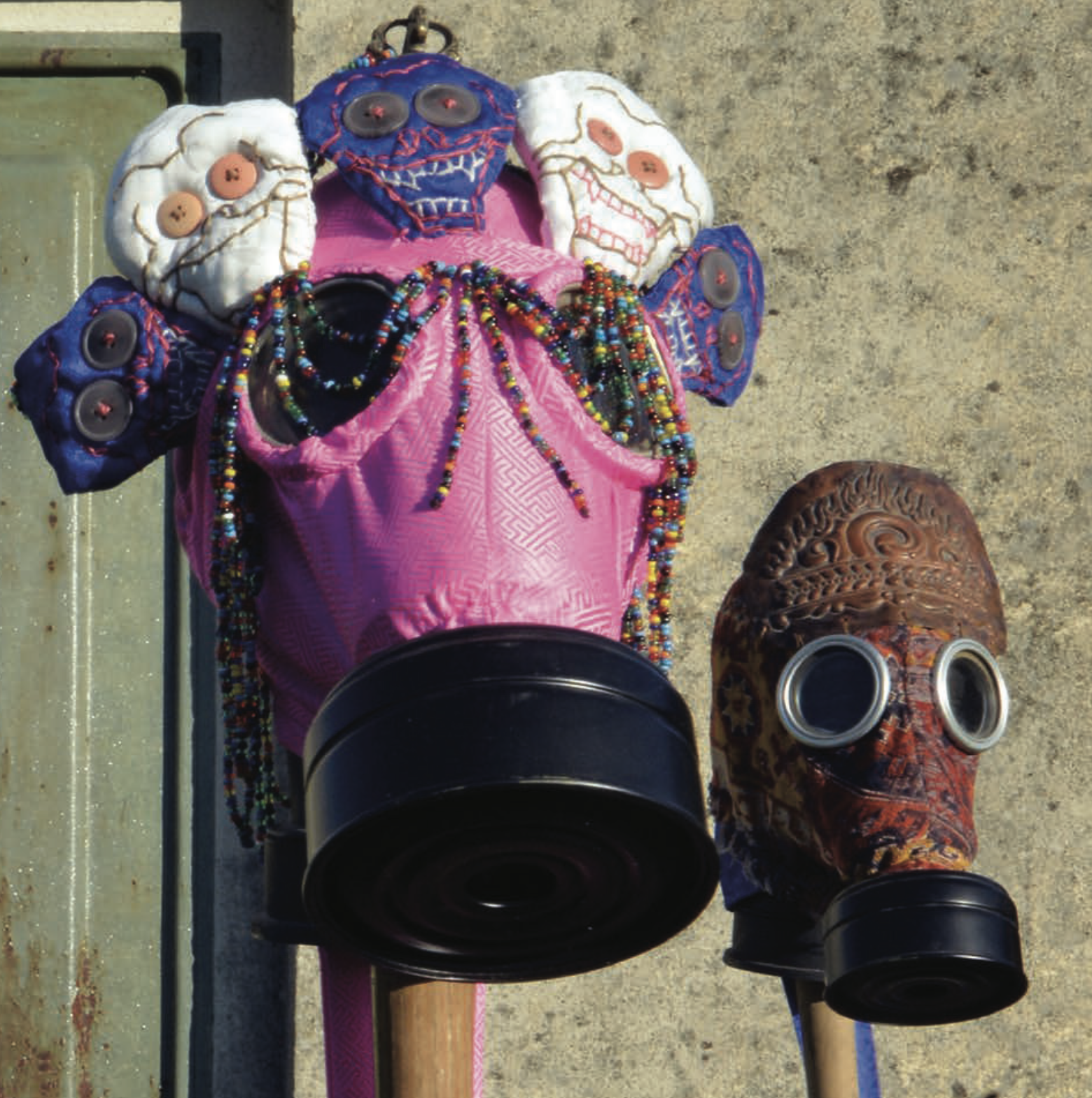
Nomin Bold participated in documenta in 2017 and the Venice Biennale in 2026. Her Oron series brings Buddhist and shamanic references together with gas masks. Mounted on long handles, the objects resemble hobby horses, with colourful fabrics giving each its own character. The masks introduce a more troubling association: the need for protection from the air we breathe.
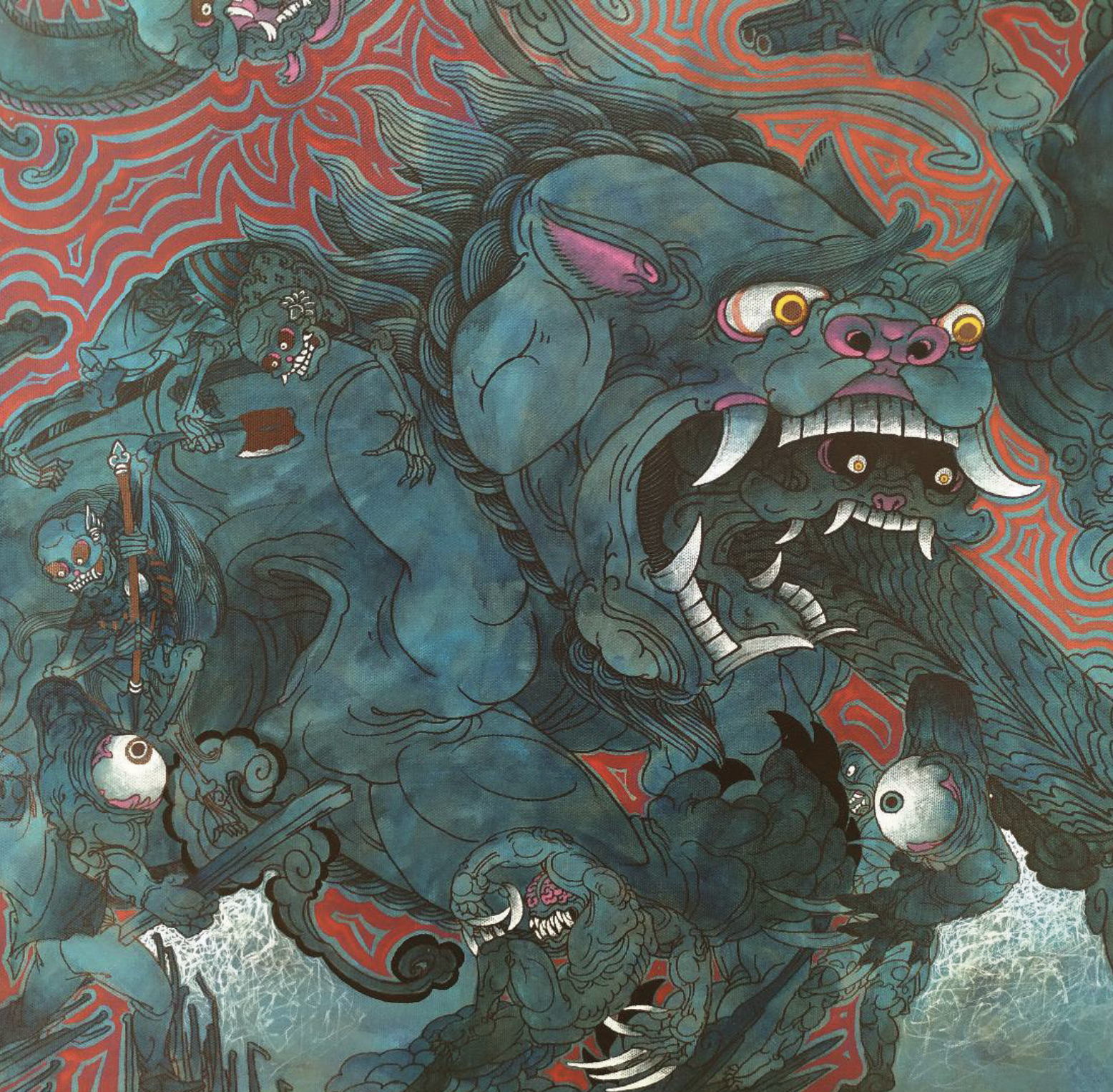
Gerelkhuu Ganbold’s Interference takes a personal route. The four-part painting stretches over six metres and gathers memories of people and experiences that have stayed with him. In his accompanying statement, he describes including things he both loves and hates about his past. Painting becomes a way to preserve those connections while keeping them distinct from life in the present.
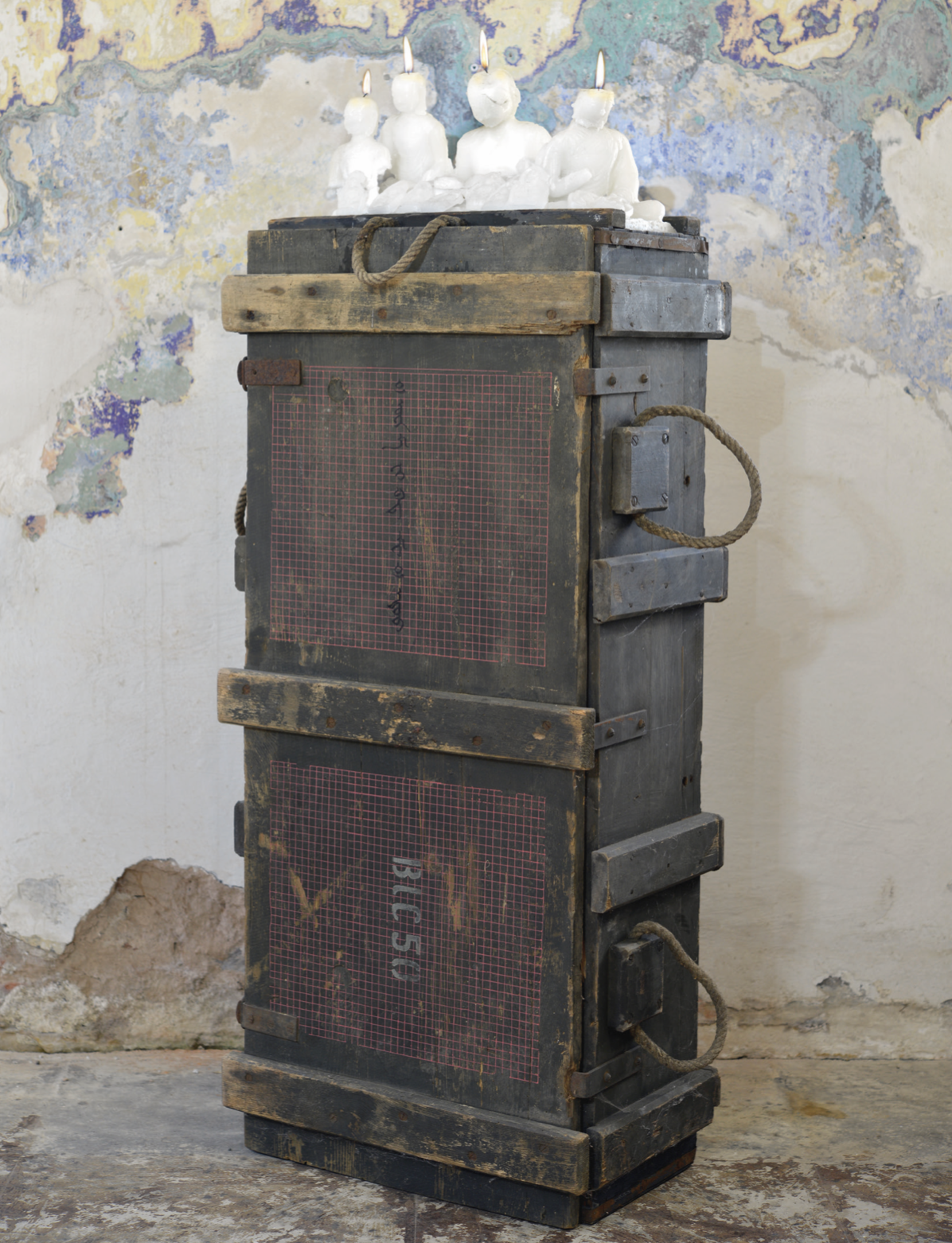
Baatarzorig Batjargal’s Mantra creates a sharp encounter between devotion and military history. Four Buddha figures, presented as votive candles, stand on a German Second World War ammunition box. The work reverses a familiar gesture: instead of offering a candle to the Buddha, the Buddha figure itself becomes the candle.
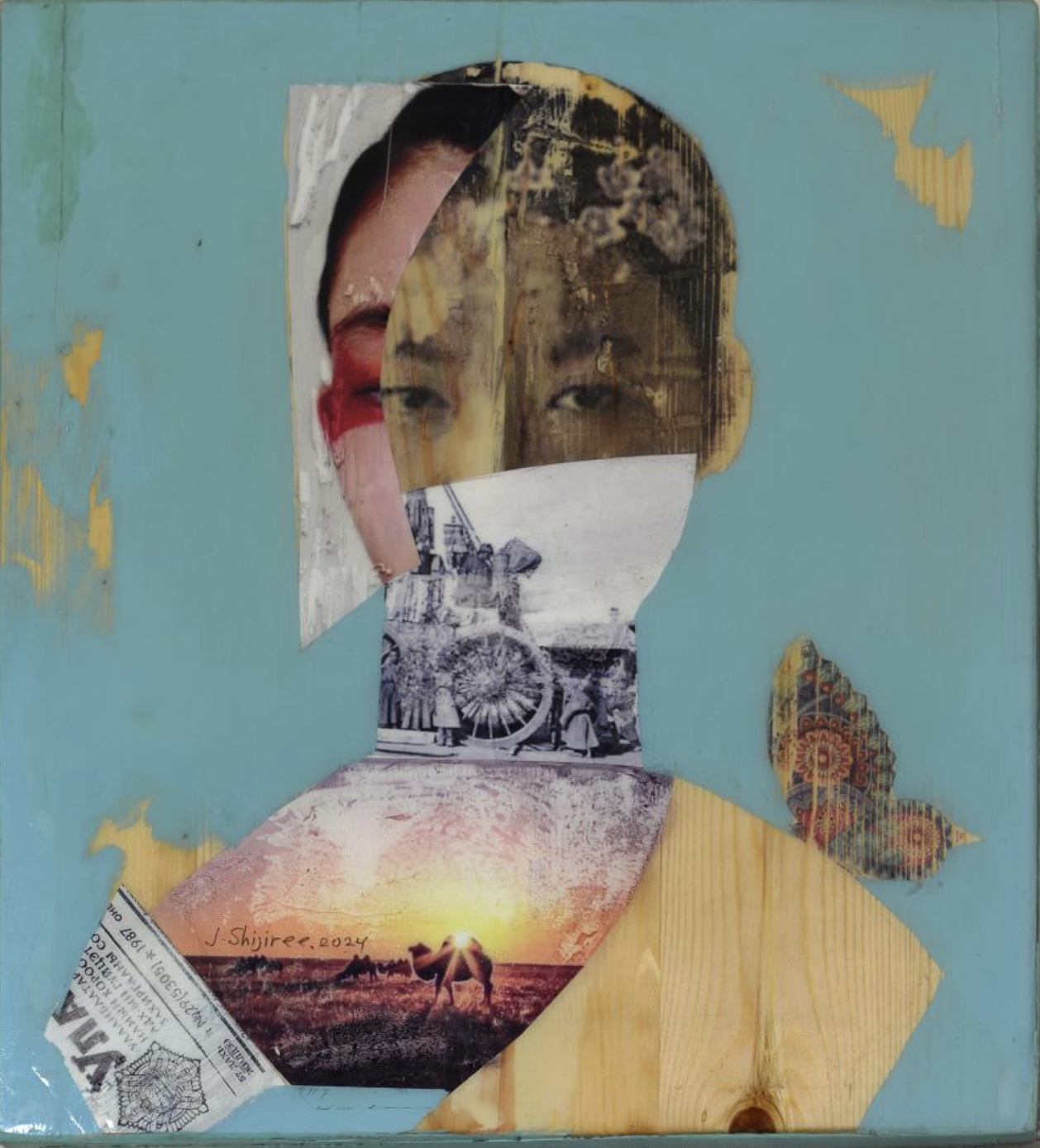
Shijirbaatar Jambalsuren’s Urbanization series draws us towards quieter encounters. Young women look outward or lower their eyes, their faces accompanied by historical documents, newspaper clippings and postcards. These fragments connect the portraits with Mongolia’s landscape and cultural heritage.
An inspiration for the series is White Tara, the seventeenth-century sculpture by Zanabazar, the artist and spiritual leader. Its influence brings a historical image of contemplation into these contemporary portraits.
Tradition in the present tense
The exhibition also introduces audiences to Mongol Zurag, a modern Mongolian art tradition that draws on older visual practices. In SPIRIT WORLD, that relationship between inheritance and invention takes many forms. Spiritual imagery can hold a memory, confront violence or express concern for the environment.
Eller and THEgallery bring these approaches together while allowing each artist’s concerns to emerge. You might first notice the scale of a painting, the expression on a face or the strange familiarity of a masked horse. The histories behind those images unfold more slowly.
There is plenty here to pause over during Paris’s busy art week. The works ask how beliefs and memories survive change, and what happens when familiar traditions take unexpected forms.
SPIRIT WORLD @ Asia NOW Paris THEgallery · Stand R01, Cour des Remises Monnaie de Paris, 11 Quai de Conti, 75006 Paris Artists Nomin Bold Gerelkhuu Ganbold Baatarzorig Batjargal Shijirbaatar Jambalsuren October 19–24, 2026 October 19: VIP preview, by invitation October 20–24: open to the public More information: THEgallery · Asia NOW Paris